India's Climate Finance Trajectory: From Targets to Action
From redesigning products to embracing renewable energy and implementing circular business models, companies are undertaking multifaceted approaches to reduce their carbon footprint. Let's delve into some leading strategies being employed by corporations worldwide.

India stands at a critical juncture in its quest for sustainable development, particularly in the context of climate change mitigation and adaptation. As the world grapples with the urgent need to transition towards a greener economy, India finds itself at the forefront, navigating complex financial landscapes to support its ambitious climate goals. In this article, we delve into the multifaceted terrain of climate finance in India, exploring current funding mechanisms, requirements, challenges, and potential pathways for accelerating green investments.

Setting the Stage: India's Climate Finance Needs
The Ambitious Targets
India's commitment to combatting climate change is underscored by its ambitious targets, firmly establishing it as a key player in global sustainability efforts. One of the most significant milestones is India's pledge to achieve net-zero emissions by 2070. This bold initiative signifies India's resolve to transition towards a carbon-neutral future, aligning its trajectory with the broader global imperative to mitigate climate change.
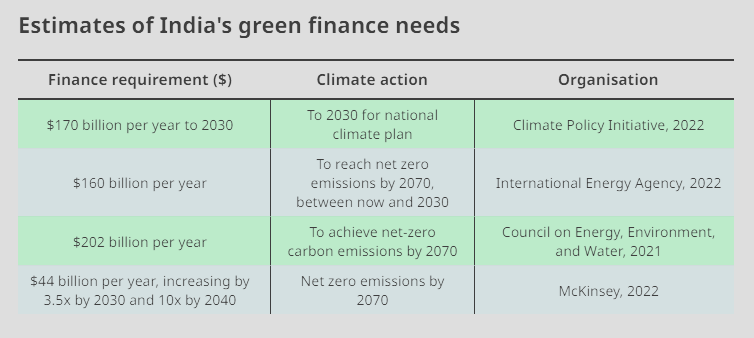
Table: India's Climate Finance Requirements
Furthermore, India has set a target to ramp up its clean energy capacity to 500 gigawatts by 2030. This ambitious goal reflects India's recognition of the pivotal role renewable energy plays in reducing greenhouse gas emissions and diversifying its energy portfolio. By harnessing solar, wind, hydro, and other renewable sources, India aims to not only curb its carbon footprint but also enhance energy security and resilience.
The Funding Gap
While India's climate ambitions are commendable, they come with a substantial financial burden. The Council on Energy, Environment, and Water estimates that India will require a staggering $10.1 trillion in investment to achieve net-zero emissions. This colossal sum underscores the magnitude of the challenge and the scale of investment needed to realize India's climate goals.
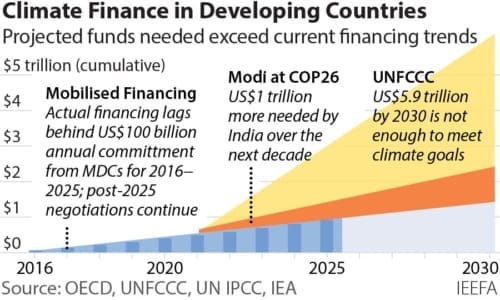
Graph 1: India's exceeding Climate Funding Gap
However, despite the pressing need for capital, the current flow of green finance falls far short of the mark. With only about a quarter of the required funds being mobilized annually, India faces a significant funding gap in its quest for sustainability. This shortfall poses a formidable obstacle to realizing India's climate ambitions and underscores the urgency of scaling up investment efforts.
In essence, bridging the funding gap is imperative for India to accelerate its transition to a low-carbon, resilient economy. Addressing this challenge requires innovative financing mechanisms, robust policy frameworks, and concerted efforts from both public and private stakeholders. Only through collective action can India unlock the capital needed to pave the way towards a sustainable future.
Current Funding Landscape
Domestic vs. International Finance
Domestic Dominance: In India's climate finance ecosystem, domestic sources play a pivotal role, constituting the majority of funding inflows. These domestic funds stem from various sources, including government initiatives, development finance institutions, and private sector investments. India's robust domestic financing mechanisms underscore its commitment to driving sustainable development and addressing climate change challenges from within.
International Contributions: While domestic sources form the backbone of India's climate finance, international contributions also play a significant role. These funds, sourced from multilateral institutions, bilateral agreements, and global alliances, complement domestic financing efforts and provide additional resources to bolster India's climate resilience. Notably, initiatives like the Glasgow Financial Alliance for Net Zero (GFANZ) offer substantial opportunities for India to tap into global capital pools and access additional funding for climate-related projects.
Challenges in Accessing Finance
Lack of Clarity: One of the primary hurdles hindering the flow of climate finance in India is the lack of clear definitions for 'green' economic activities. Without standardized criteria or a green taxonomy to delineate eligible projects, investors face uncertainty when evaluating potential investments. This ambiguity undermines investor confidence and stifles the mobilization of funds for climate projects.
Absence of Green Taxonomy: India's absence of a green taxonomy further compounds the challenges associated with accessing finance. A green taxonomy provides a standardized framework for classifying environmentally sustainable investments, facilitating informed decision-making and enabling the identification of green opportunities. Without such a taxonomy in place, India struggles to attract investment capital and channel funds towards climate-resilient initiatives.
Limited Funding Sources: Despite the growing recognition of the importance of climate finance, India grapples with limited sources of funding within its borders. The availability of climate finance remains constrained, particularly for projects with high upfront costs or long payback periods. This scarcity of funding options poses a significant barrier to scaling up climate action and achieving India's ambitious sustainability goals.
In essence, while the demand for climate finance in India is evident, unlocking and accessing funds remain formidable challenges. Addressing these barriers requires concerted efforts from policymakers, financial institutions, and other stakeholders to create an enabling environment for sustainable investment. By overcoming these challenges, India can harness the full potential of climate finance to drive its transition towards a greener, more resilient future.
Pathways to Accelerate Green Investments
Defining Green Finance
Clarity and Consistency: India's journey towards sustainable development hinges on establishing a clear and consistent definition of green finance. A robust framework, akin to international standards, is essential to delineate green economic activities and investments. A green taxonomy, similar to those adopted by leading economies, would provide much-needed clarity to investors and financial institutions, guiding capital towards environmentally sustainable projects.
Role of Green Taxonomy: The adoption of a green taxonomy is paramount in streamlining investment decisions and aligning financial flows with India's climate objectives. By categorizing projects based on their environmental impact and sustainability criteria, the taxonomy enables investors to identify and prioritize green opportunities. Moreover, it facilitates the monitoring and tracking of green investments, ensuring transparency and accountability in the allocation of funds.
Leveraging Domestic Resources
Government Intervention: India possesses significant potential to mobilize domestic resources for climate finance initiatives. Direct government spending on green projects, coupled with targeted policies such as priority sector lending, can unlock substantial funds for climate action. By earmarking budget allocations and incentivizing green investments, the government can catalyze private sector participation and drive sustainable growth.
Establishment of Green Financial Institutions: A key enabler of green finance is the establishment of dedicated institutions focused on promoting sustainable investments. A green financial institution, equipped with the mandate to mobilize and deploy capital for climate projects, can serve as a focal point for domestic and international investors. Through innovative financing mechanisms and risk-sharing arrangements, such institutions can mitigate investment barriers and unlock new avenues for green funding.
Blended Finance Mechanisms
Harnessing Public-Private Partnerships: Blended finance, characterized by the strategic blending of public and private capital, presents a viable pathway to bridge the funding gap for climate projects. By leveraging government subsidies, guarantees, and concessional finance, India can incentivize private sector participation in green initiatives. This collaborative approach not only enhances the attractiveness of green investments but also fosters innovation and scalability in sustainable finance solutions.
Role of Incentives and Subventions: Incentives play a crucial role in stimulating private sector interest in climate finance. Through targeted subsidies, subventions, and tax incentives, India can incentivize commercial banks and investors to allocate capital towards green projects. By reducing financial risks and enhancing returns on investment, these incentives create a conducive environment for scaling up green finance initiatives and driving systemic change.
In summary, accelerating green investments in India requires a multi-faceted approach encompassing regulatory frameworks, institutional reforms, and innovative financing mechanisms. By defining green finance standards, leveraging domestic resources, and embracing blended finance models, India can unlock the full potential of sustainable finance and propel its transition towards a low-carbon, resilient future.
Pathways to Accelerate Green Investments
Defining Green Finance
Clarity and Consistency: India's journey towards sustainable development hinges on establishing a clear and consistent definition of green finance. A robust framework, akin to international standards, is essential to delineate green economic activities and investments. A green taxonomy, similar to those adopted by leading economies, would provide much-needed clarity to investors and financial institutions, guiding capital towards environmentally sustainable projects.
Role of Green Taxonomy: The adoption of a green taxonomy is paramount in streamlining investment decisions and aligning financial flows with India's climate objectives. By categorizing projects based on their environmental impact and sustainability criteria, the taxonomy enables investors to identify and prioritize green opportunities. Moreover, it facilitates the monitoring and tracking of green investments, ensuring transparency and accountability in the allocation of funds.
Leveraging Domestic Resources
Government Intervention: India possesses significant potential to mobilize domestic resources for climate finance initiatives. Direct government spending on green projects, coupled with targeted policies such as priority sector lending, can unlock substantial funds for climate action. By earmarking budget allocations and incentivizing green investments, the government can catalyze private sector participation and drive sustainable growth.
Establishment of Green Financial Institutions: A key enabler of green finance is the establishment of dedicated institutions focused on promoting sustainable investments. A green financial institution, equipped with the mandate to mobilize and deploy capital for climate projects, can serve as a focal point for domestic and international investors. Through innovative financing mechanisms and risk-sharing arrangements, such institutions can mitigate investment barriers and unlock new avenues for green funding.
Blended Finance Mechanisms
Harnessing Public-Private Partnerships: Blended finance, characterized by the strategic blending of public and private capital, presents a viable pathway to bridge the funding gap for climate projects. By leveraging government subsidies, guarantees, and concessional finance, India can incentivize private sector participation in green initiatives. This collaborative approach not only enhances the attractiveness of green investments but also fosters innovation and scalability in sustainable finance solutions.
Role of Incentives and Subventions: Incentives play a crucial role in stimulating private sector interest in climate finance. Through targeted subsidies, subventions, and tax incentives, India can incentivize commercial banks and investors to allocate capital towards green projects. By reducing financial risks and enhancing returns on investment, these incentives create a conducive environment for scaling up green finance initiatives and driving systemic change.
India's Call to Action: A $1 Trillion Vision
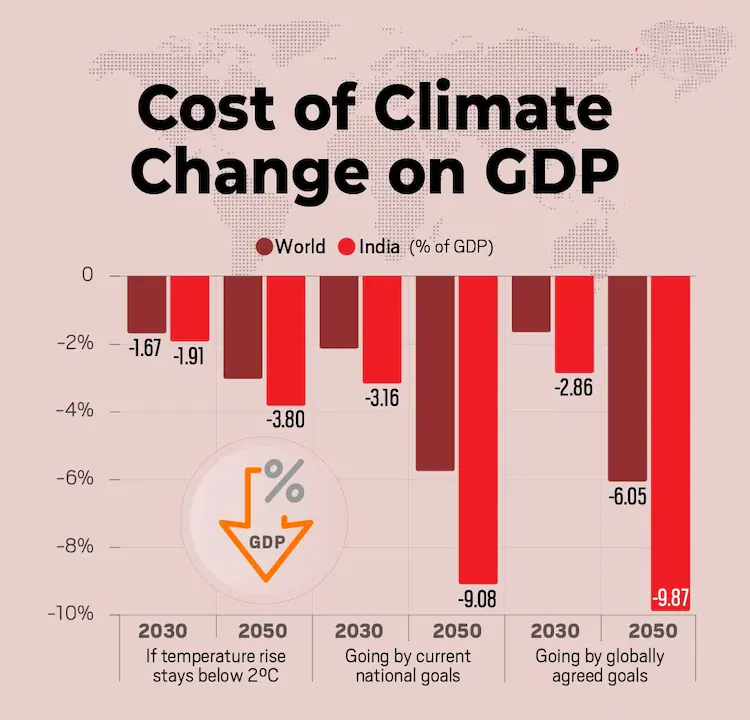
Graph 2: Impact of Climate Change on India's GDP in the upcoming years
Commitment to Climate Finance: India's recent proposal to the United Nations Framework Convention on Climate Change (UNFCCC), advocating for developed nations to commit $1 trillion annually in climate finance, signals a bold stance in the global fight against climate change. This ambitious vision underscores India's unwavering commitment to securing the necessary resources to drive its transition towards a sustainable, climate-resilient future.
Driving Global Climate Ambition: By calling for increased financial support from developed countries, India aims to galvanize global efforts to combat climate change. The proposed $1 trillion annual funding target reflects India's recognition of the scale and urgency of the climate crisis, emphasizing the need for collective action and solidarity among nations to address this existential threat.
Clear Roadmap for Climate Action: India's proposal to the UNFCCC articulates a clear roadmap for mobilizing climate finance and accelerating climate action. By outlining specific financial targets and timelines, India provides a comprehensive framework for addressing the funding gap and financing the transition to a low-carbon economy. This proactive approach demonstrates India's leadership in shaping the global climate agenda and advocating for equitable and sustainable solutions.
Commitment to Equity and Responsibility: India's call for $1 trillion in climate finance underscores its commitment to principles of equity and common but differentiated responsibilities (CBDR). Recognizing the historical contributions of developed countries to global emissions and the disproportionate impacts of climate change on vulnerable communities, India emphasizes the need for developed nations to fulfill their climate finance commitments and support developing countries in their climate resilience efforts.
Catalyzing Climate Action: By championing ambitious climate finance targets, India aims to catalyze transformative climate action at the national, regional, and global levels. The proposed $1 trillion annual funding goal serves as a catalyst for mobilizing resources, scaling up investments in clean energy, sustainable infrastructure, and climate adaptation measures, and driving innovation and collaboration to address the climate emergency.
Conclusion
The journey towards decarbonization stands as a collective endeavor, necessitating collaborative efforts from corporations, research institutions, governments, and individuals worldwide. As we confront the urgent challenges posed by climate change, the imperative to reduce carbon emissions and transition towards sustainable practices has never been more pronounced. In this endeavor, corporations play a pivotal role, serving as catalysts for change and driving innovation across industries.
Embracing Innovation and Collaboration: Corporations are increasingly recognizing the importance of embracing innovative strategies to mitigate their carbon footprint and foster sustainability. By leveraging cutting-edge technologies, such as artificial intelligence, advanced modeling, and digital decision-making, companies can optimize their operations, minimize resource consumption, and enhance environmental performance. Moreover, strategic collaborations with research institutions, startups, and industry partners enable corporations to access novel solutions, share best practices, and accelerate progress towards decarbonization goals.
Corporate Responsibility and Environmental Stewardship: In the face of mounting environmental challenges, corporate responsibility extends beyond profit margins to encompass broader commitments to sustainability and environmental stewardship. Decarbonization emerges as a cornerstone of corporate responsibility, reflecting a firm's commitment to mitigating climate change, preserving natural resources, and safeguarding the planet for future generations. By integrating decarbonization strategies into their business models, corporations can align economic prosperity with environmental sustainability, thereby fulfilling their role as responsible global citizens.
A Pathway to Lasting Change: As the global community strives to address the climate crisis, decarbonization emerges as a transformative pathway towards lasting change. By reducing carbon emissions, transitioning to renewable energy sources, and adopting sustainable practices, corporations can not only mitigate environmental impact but also drive economic growth, enhance competitiveness, and foster resilience against climate-related risks. Through collective action and sustained commitment, corporations can lead the transition towards a sustainable future, laying the foundation for a greener, more resilient planet.
In conclusion, the imperative to decarbonize transcends individual interests and mandates collective action on a global scale. By embracing innovation, collaboration, and corporate responsibility, corporations can spearhead the transition towards a low-carbon economy, contributing to a more sustainable and prosperous future for all. As we navigate the complexities of the climate crisis, decarbonization remains a beacon of hope, guiding us towards a brighter, more resilient tomorrow.